


“What will my recovery actually be like?”
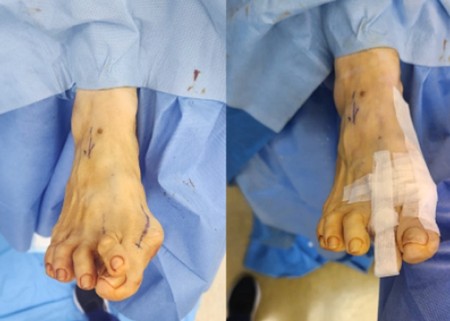
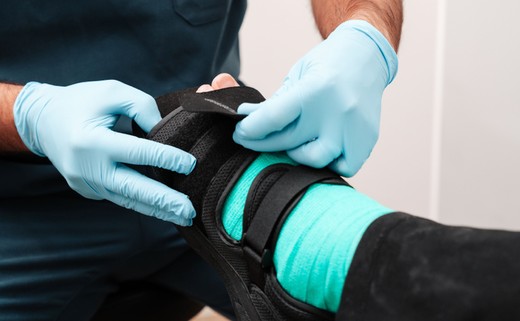
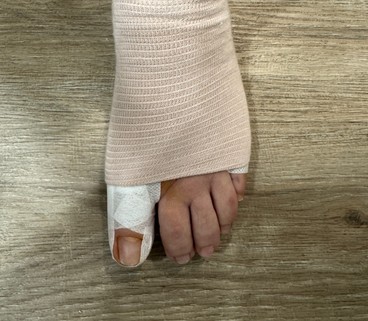
Bunion surgery recovery is a gradual process. Patients are able to walk immediately following surgery, the foot continues to heal and change for many months afterwards. Here is a general guide to what you can expect during the first 12 months following bunion surgery.
The Day of Surgery
The day finally arrives!
Your foot will be dressed in a compression style dressing while wearing a post op sandal. You will be able to walk home weight bearing on your foot, however, being able to weight bear does not mean that you should be walking around all day. Your priorities are:
- Resting, keeping the foot elevated and applying ice on top of your ankle
- Take your prescribed medication (antibiotics, pain medications, anti-inflammatories)
- Walk around 10 minutes per hour/to tolerance
- Keep the surgical dressing clean and dry
Week 1 – Rest, Elevate and Keep It Minimal
Rest, rest and more rest!
Resting will allow you to control swelling and pain. Although you can put your foot down and walk in your post operative sandal, we encourage you to keep walking to a minimum. A good rule during the first week is to only walk for approximately 10 minutes each hour when necessary. This may mean walking to the bathroom, making yourself a cup of tea or getting something to eat, and then returning to your chair or bed and elevating the foot again. It is completely normal to experience some swelling, bruising and mild discomfort. The majority of patients take simple pain medications to help with the pain and inflammation. We also advise you to place an icepack on top of the ankle to also help with the swelling and pain.
Week 2 – Starting to Move a Little More
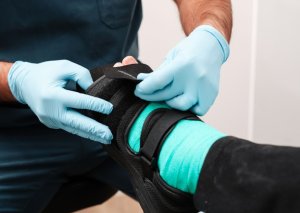
By the second week you might be starting to feel more comfortable. We would have performed the initial dressing change (week 1) and a similar large compression dressing is placed back on. At the end of week two, the sutures are typically removed and the large compression dressing reduced.
You will still be wearing your post-operative sandal and should continue to protect the foot. You can gradually increase your walking around the house, but the aim is still to avoid unnecessary time on your feet. You may notice that the foot feels better in the morning and becomes more swollen as the day progresses. This is very common.
Remember: Swelling is normal but it can also be an indication that you did too much.
Weeks 3–4 – Becoming More Independent
Say goodbye to the large dressing!
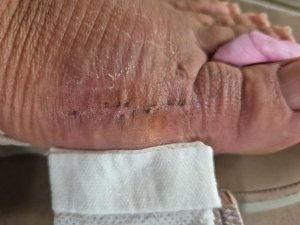
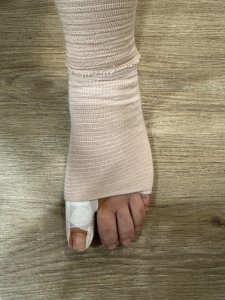
Week 3: The large dressing is removed, a light dressing and compression garment is now applied. You are able to get the foot wet and we transition you into wide fitting/stiff joggers (e.g. Asics, New Balance, Brooks). It may take some time to get used to walking around in the joggers however short slow steps is the key.
You can spend more time on your feet now performing light daily activities. You should continue to follow your post-operative instructions and need to manage some swelling in the region.
It is also time to get to work on that wound/scar! Bio oil, moisturising cream or salt water baths are ideal to help remove dry scaly skin and ensure a nice light smooth scar. Exercise: Individual patients might have some specific exercises, however walking around (in your joggers) and putting weight through the big toe is enough at this stage to help with the strength and mobility. Most patients will return to work at 4 weeks post surgery however this can vary depending on what they do for work and the type of surgery that was performed.
6 Weeks – An Important Milestone
Around six weeks, we typically order some x-rays to review how the bone healing is coming along. Bone callus/healing between the bone cut can be identified on your x rays at this point.
You should feel more confident on your feet now walking around with the joggers. We now progress to exercises while weight bearing such as raising up on your toes. We find you still have some swelling in and around the big toe joint which is normal – we get you to massage the area and perform some exercises to help with the range of motion of the joint.
You can start to wear different footwear, so long as they are not too narrow and have a stiff stable sole. Remember, it is still early days – it typically takes bone 8 weeks to heal and soft tissue can take 12–14 weeks to heal. You will still have days of pain, swelling and discomfort.
8–12 Weeks – Returning to Normal Life
Between two and three months, many patients feel that they are getting back to a much more normal routine. You may be able to:
- Walk longer distances
- Wear a greater range of shoes
- Notice swelling starting to subside
- Begin gradually increasing light exercise (no high-impact activities should be performed)
3–6 Months – The Foot Continues to Settle
This is the stage where many patients start to forget that they have even had surgery. Walking becomes easier, footwear options improve and day-to-day activities generally become much more comfortable. However, there may still be some swelling around the big toe joint. The foot can continue to change shape and settle as the soft tissues adapt to their new alignment. Exercise can generally be increased progressively, depending on the type of surgery and your individual recovery. If you enjoy running, gym training, tennis or other higher-impact activities, your return should be gradual rather than an immediate return to your previous level.
9–12 Months – The Final Stages of Recovery
At six to twelve months, we generally expect the foot to be much closer to its long term result. The surgical area should feel more settled, swelling should continue to reduce and the foot should be functioning much more normally. For some patients, there may still be a small amount of residual swelling or stiffness. This can continue to improve beyond 12 months. You should be able to return to full levels of activity with no restriction.
What About the Scar?
The appearance of the scar also changes over time. Initially, the scar may be red, firm or more noticeable. Over the following months it generally becomes softer and less visible.
The Most Important Part of Bunion Surgery Recovery
Bunion surgery is not simply about the operation itself. The recovery is an important part of achieving a good result. The first week is about rest and swelling control. The first six weeks are about protecting the correction while the foot heals. The following months are about gradually restoring strength, movement, footwear and activity. By 12 months, most patients have come a long way from the day of their surgery.
Remember – Recovery Is a Journey
It is completely normal to have good days and bad days during bunion surgery recovery. At Sydney Podiatric Surgery, we aim to provide patients with a clear understanding of their surgery, expected recovery and the steps involved in returning to normal activity.
Do you want to know more about this procedure?
Learn how bunion surgery is performed, some of the risks involved, and other frequently asked questions.