


Surgical treatment for bunionette deformity
What Is a Tailor’s Bunion?
A tailor’s bunion, also known as a bunionette, is a bony prominence that develops on the outside of the foot at the base of the little toe. For some people, a tailor’s bunion causes little or no discomfort. For others, the prominent bone can become painful, inflamed and difficult to fit into normal footwear. When footwear modification and conservative treatment are no longer providing adequate relief, tailor’s bunion surgery may be considered to correct the deformity and improve shoe comfort.
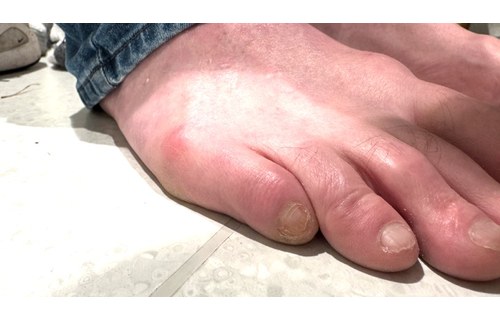
Common symptoms include:
- Pain over the outside of the little toe joint
- Redness and swelling around the prominence
- Corn or callus formation over the bunionette
- Corn or callus formation over the 5th toe
- Difficulty wearing narrow or steel-capped footwear
- Pain when walking or standing for prolonged periods
- Irritation from the side of shoes
- Increasing prominence of the fifth metatarsal (outside foot)
What Causes a Tailor’s Bunion?
There are several factors that can contribute to the development of a tailor’s bunion. These can include:
- The alignment and shape of the fifth metatarsal
- Increased angulation of the fifth metatarsal
- Foot biomechanics and loading patterns
- Tight or narrow footwear
- Repetitive pressure on the outside of the foot
- Structural or inherited foot shape
- Previous trauma or surgery
In some patients, the fifth toe may also become rotated or displaced, contributing to increased pressure and difficulty with footwear.
Conservative Treatment
Tailor’s bunion treatment does not always require surgery. Depending on the severity of symptoms, treatment may include wider footwear, padding around the prominence, activity modification, treatment of corns and callus and anti-inflammatories where appropriate. However, if the underlying bony deformity continues to cause significant pain despite appropriate conservative treatment, tailor’s bunion surgery may be considered.
When Is Tailor’s Bunion Surgery Recommended?
Surgery may be appropriate when:
- Pain continues despite conservative treatment
- The patient has difficulty wearing normal footwear
- The bunionette is causing recurrent corns or calluses
- The deformity is progressively becoming more prominent
- Work footwear, including steel-capped shoes, is difficult to tolerate
- The symptoms are significantly affecting walking, exercise or daily activities
The aim of tailor’s bunion surgery is not simply to remove the visible bump. The underlying alignment of the fifth metatarsal needs to be assessed so that the appropriate procedure can be selected.
What Does Tailor’s Bunion Surgery Involve?
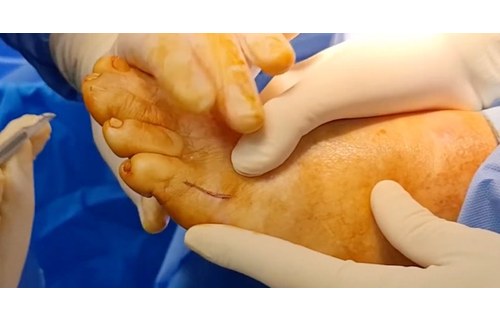
The surgical procedure depends on the severity and type of deformity. The surgery is performed under general anaesthesia and is performed as a day surgery. A small incision is performed over the bony prominence and an osteotomy of the fifth metatarsal is performed. An osteotomy involves making a controlled cut in the bone so that the position and alignment of the fifth metatarsal can be corrected, moving the bone inwards and making it less prominent. The bone cut is then stabilised using a small screw. The majority of patients are able to weight bear to tolerance in a dressing and post-operative sandal. The exact surgical technique is determined after clinical examination and assessment of weight-bearing X-rays.
Recovery After Tailor’s Bunion Surgery
Recovery can depend on the type of procedure performed and the extent of correction. Typically, most patients will spend 2–3 weeks in a post-operative shoe and weight bear to tolerance. Pain is generally minimal and patients may take some mild analgesia. Sutures are removed at this point and patients are then transitioned into supportive joggers for the next 3 weeks. During this time, adequate bone healing will occur and standard shoes can be worn and tolerated. Some swelling in the area can be expected while complete healing occurs. Patients can return to gentle physical activity at this point, gradually building up to more strenuous activity.
Is Tailor’s Bunion Surgery Right for You?
Not every tailor’s bunion requires surgery. The decision should be based on the level of pain, functional limitations, footwear problems and the underlying structure of the foot. At Sydney Podiatric Surgery, Dr Abdel Kak will assess your foot and discuss both non-surgical and surgical options to determine the most appropriate tailor’s bunion treatment for your individual circumstances.
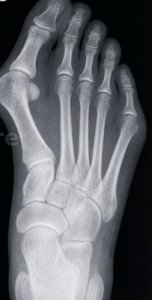
Figure 1: Pre-operative image of a tailor’s bunion – common symptoms include redness, footwear complications including rubbing, and corn and callus formation over the joint
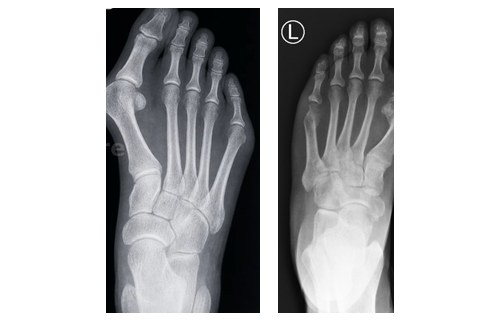
Figure 2: Pre-operative x-ray showing the prominence of the fifth metatarsal
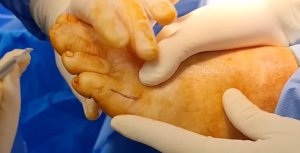
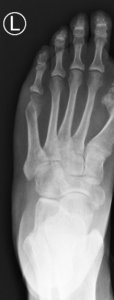
Figure 3: Intra-operative image showing incision placement for tailor’s bunion surgery – surgery involves an osteotomy (cutting of the bone) and moving it inwards to reduce the prominent bone
Figure 4: Post-operative x-ray showing the medial shift of the tailor’s bunion – the osteotomy performed was a modified Weil osteotomy, providing a large surface area and stability for healing
Do you want to know more about this procedure?
If a tailor’s bunion is making footwear uncomfortable, Dr Abdel Kak can assess your foot and talk through the non-surgical and surgical options available.