


In the clinic, there are some patients who come and see me with what they believe is an ingrown toenail.
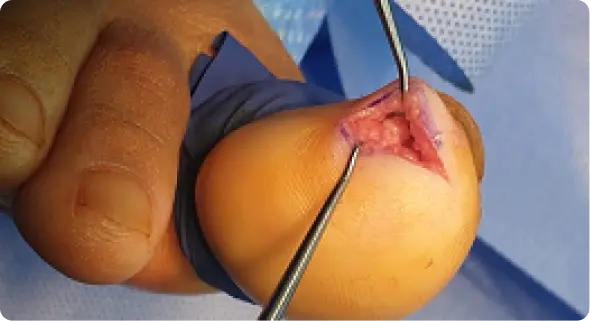
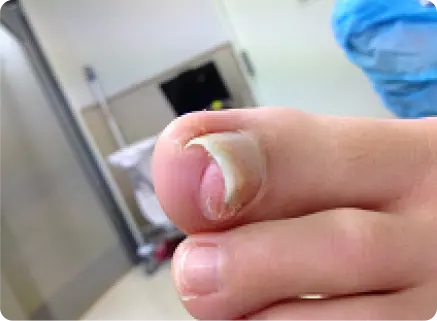
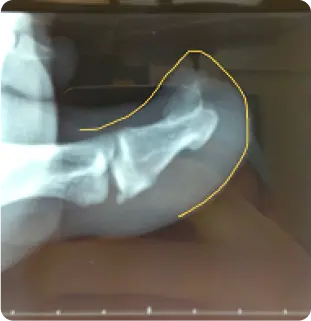
Some podiatrists and GPs may treat it as an ingrown toe nail (antibiotics, nail spicule removal, PNA) but there may be no improvement. In other circumstances, some patients will notice an unusual growth beneath the toenail and pushing on that growth is usually firm and painful. In these cases I like to take an x ray of the foot to see if there is any underlying pathology – we usually see a bony growth known as an exostosis or osteochondroma which is the primary cause of the nail change/pain.
What is an Osteochondroma?
An osteochondroma is a benign (non-cancerous) bone growth that forms on the surface of a bone. Osteochondromas consist of boney growth covered with cartilage cap. When they form under the toenail, they can create unique issues due to the limited space and sensitivity of the nail bed with activity and footwear.
Symptoms of an Osteochondroma
In most cases, an osteochondroma/boney exostosis under the toenail may present with symptoms such as:
⦁ Pain and Discomfort: Due to the pressure under the toenail, particularly when walking or wearing tight shoes.
⦁ Changes in the Nail Shape: The toenail may appear lifted or deformed as it grows over the osteochondroma.
⦁ Swelling and Tenderness: The area may become sensitive to touch.
⦁ Infections: repeated ingrown toenails can occur or any break in the skin can cause repeated bacterial infections in the area
⦁ Difficulty with Nail Care: Routine nail trimming may become difficult due to the altered shape and surface.
Surgical Treatment Options
Surgery for these bony growth is commonly done and is usually uncomplicated. A small incision is performed at the apex of the toe and the boney growth is removed and sometimes sent away for histopathology testing to make sure it isn’t something more sinister. Patients are able to walk in a post-operative shoe afterwards and will need to limit their activity for a couple weeks until the sutures are removed and adequate wound healing has occurred. We always tell patients that it may take several months for the toenail to fully regrow, and it might look different from before depending on the impact the underlying growth has had on the nail bed.
Do you want to know more about this procedure?